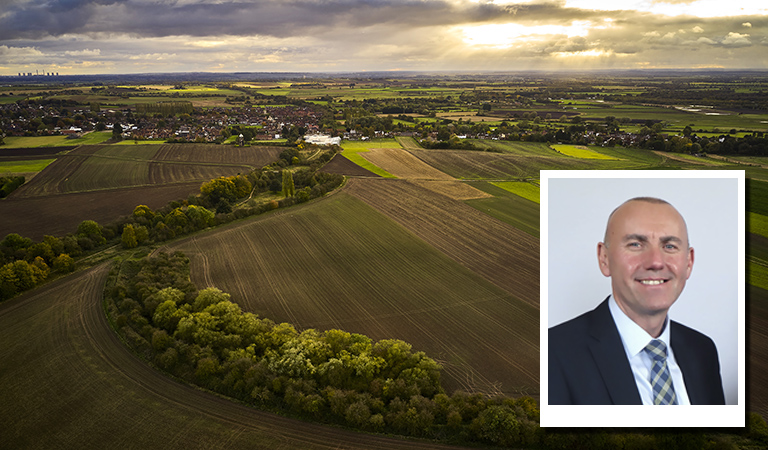
The Isle of Axholme’s natural and historic landscape, shaped over centuries by farming, drainage and settlement, could be set on a stronger long-term footing under plans being considered by North Lincolnshire Council.
Sitting at the heart of the Humberhead Levels – one of England’s most important low-lying landscapes – the Isle of Axholme plays a critical role in flood management, food production, biodiversity and carbon storage.
The area is home to some of the country’s most important natural and historic landscapes, including England’s largest areas of lowland raised mire, extensive surviving medieval strip field systems – still visible around places such as Belton – and some of the first landscapes in Britain to be drained in the 1620s by Dutch engineer Cornelius Vermuyden.
Cllr Rob Waltham, leader, North Lincolnshire Council, said: “The Isle of Axholme is a unique landscape shaped by centuries of farming, drainage and community effort.
“We’re looking at this because it offers a practical way to protect that legacy, strengthen flood resilience and support those who live and work here, without introducing new planning restrictions.
“Thousands of residents back previously plans to protect the landscape through designating it as an area of outstanding natural beauty – this was refused by Government.
“I promised to protect the landscape and this will allow us to do that.”
The report being considered by the council sets out how these challenges and opportunities could be addressed in a more coordinated way, by supporting participation in the proposed Humberhead UNESCO Biosphere – a non-regulatory designation focused on conservation, sustainable development and community involvement.
If approved, participation would help better coordinate peatland restoration and flood management, support farmers and landowners to access funding and innovation, accelerate nature recovery across farmland and drainage systems, and strengthen the Isle of Axholme’s identity as a distinctive place to live, work and visit.
Cllr David Rose, cabinet member for environment and strategy, said: “This is about looking after the Isle of Axholme as a living landscape – supporting wildlife, managing water better and helping communities adapt, while keeping farming and local livelihoods at the heart of decision-making.”
The designation would not introduce any new planning controls or land-use restrictions. Existing protections, such as Sites of Special Scientific Interest, would remain unchanged, and local decision-making would stay with the council.
Cabinet will consider the report when it meets on Monday, 2 February.

 Budget 2026: Balanced budget protects and backs North Lincolnshire’s future
 HY Racing joins the Fostering Friendly Scheme – A powerful new partnership with deep family roots
 Game changer for Epworth football club with cash confirmed for new pavilion
 New flags flying proudly over Brigg’s historic Buttercross
 Hurry now: final free air fryers available for pensioners across North Lincolnshire